
The Australian government recently announced & it will resume granting visas to international students in a move to push forward with international education:
Current and new students, studying online with an Australian university, while overseas due to COVID-19, will also be able to count that study towards their graduate working visa in Australia.
The temporary graduate visa (subclass 485) allows international students to stay in Australia after they graduate for two to four years to gain work experience.
This aligns post study work rights policies in Australia on par with those of Canada (in place in March) and the United Kingdom (in place in June).
But the global headwinds facing the international education sector underline that any policy shifts in Australia need to go beyond simply matching what is already on offer in leading study destinations.
Deferring students:
Australia must not only attract new students but also convince deferring students to come back.
New data show a substantial increase in the number of students deferring their studies to a later date, but a minor increase in enrolment cancellations.
There were 60,870 deferments for the year to May 2020, 45,597 more than in the same period in 2019 (15,273). Deferments were in the form of either a delayed commencement or a temporary suspension of an existing enrolment.
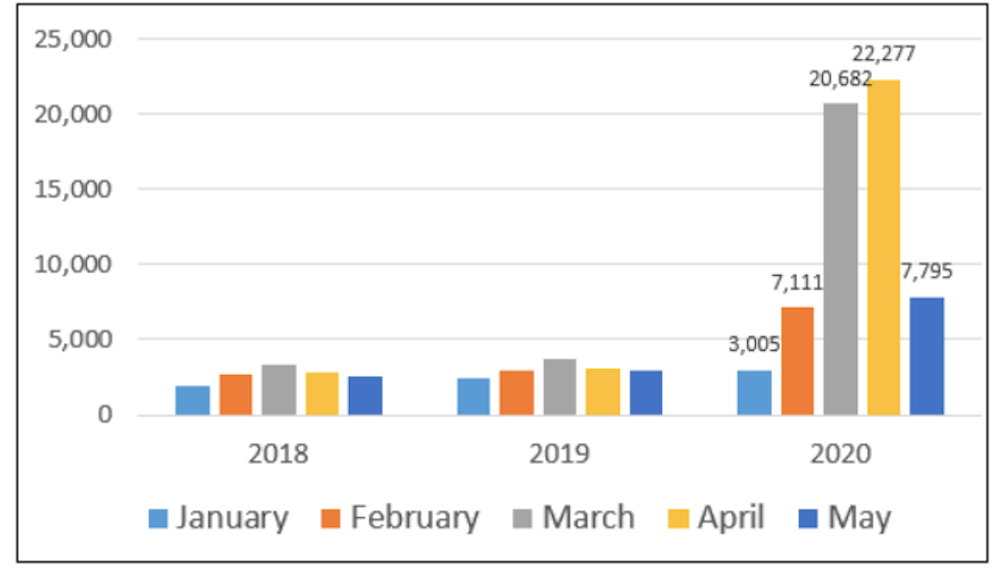
By May 31 2020, 20% (121,472) of all primary student visa holders (606,485) were outside Australia.
Post-study work is a major incentive…
We conducted a survey in 2018-19 involving 1,156 international graduates. Most of them (76%) said Australia’s temporary graduate visa played a role in their decision to study in Australia.
But the sustainability of Australia’s international education will need to address issues relating to both post-study work visa arrangements and employment outcomes for international students after graduating.
Many employers lack understanding of the visa, prefer applicants with permanent residency or hold misconceptions of complex paperwork or sponsorship involved. The chance to gain work experience in their field during their study and after they graduate is limited for many international students.
The UK, in its immigration point system, set a lower salary threshold requirement for international students coming off a post-study visa and aiming for a skilled visa. This was to address the high salary threshold many employers were unable to afford, which was one of the impediments for international graduates in securing employment in the UK.
Addressing existing barriers will enhance Australia’s reputation as a destination for quality education and a positive post study work experience.
The government and universities must also offer extended support to alumni stranded onshore, who may have been working here on their graduate visa but lost their job.
Especially for students from India:
Indian students are most affected by the access to a post-study work visa. In our above-mentioned survey, 82% of Indian students considered the visa an important factor in their decision to choose Australia, compared to the average rate of 74% for non-Indian international students.
In September 2019, the United Kingdom announced a reintroduction of their two year post-study work visa in response to the decline in international enrolments.
In the third quarter of 2019, the UK and Australia were equally searched as study destinations from India — at 16.2% and 16.8% respectively. But the UK’s September announcement had an immediate effect. According to IDP Connect data search results increased by 47% to the UK, and decreased by 15% to Australia.
According to internal university data, some universities in the UK reached their 2020 international enrolment caps as early as November 2019. Meanwhile, Indian offshore visa lodgements for Australian universities dropped by 13.5% during the period of July 2019 – January 2020.
In July, the Australian government announced it will offer current and future Hong Kong international students an additional five-year post-study work visa with a pathway to permanent residency. Only two weeks after that, there was a massive increase in interest from Hong Kong students wanting to study in Australia.
What else matters to international students:
In addition to tensions between China and Australia, the health and economic impact of COVID-19 will affect the financial capability of future international students to study overseas — as well as whether borders continue to be closed to countries.
Other factors determining how international education recovers will include how host countries support international students (on and offshore) during and in the aftermath of COVID-19.
A holistic, well-coordinated and flexible approach is crucial in determining both immediate international student recovery and long-lasting destination attraction.
Correction: this article previously referred to the 13.5% drop in Indian offshore visa lodgements for Australia as having occurred this fiscal year. The period for the drop has been corrected to having occurred between July 2019 and January 2020 — and it’s been clarified that lodgements were for Australian universities.

Canada and the UK have overtaken the US to become the world’s two most popular study abroad destination countries:
Canada and the UK have recently overtaken the USA, which dropped from first to third place in just two years, to claim the top international study abroad destination spot.
These findings came from a number of surveys undertaken by educations.com. The four surveys titled Study Abroad Trend Analysis ran from January 2018 to October 2020, and sought to assess the attitudes that prospective students held regarding international study.
UK and Canada rise driven by rapid drop in US popularity globally:
Interestingly, the report found that neither the UK nor Canada has successfully surpassed the US due to particularly significant gains in their own levels of prospective student interest.
Instead, the rise in Canada and the UK’s popularity can be attributed to the sheer extent of the decrease in popularity which US HEIs have witnessed in just over the last two years.
According to educations.com, US, Canada and the UK have consistently held the position of the top three international study destinations for a while.
However, this shift in the position of US HEIs has been incremental, which seems to demonstrate that no one singular event (for example, COVID-19), has created this effect.
US as top study abroad choice dropped from 21.6% to 10.7% from 2018 to 2020
Out of the prospective students responding to the 2018 survey, 21.6% selected the US as their top choice for study abroad.
In 2019, this dropped to 20.8%, and in January 2020, it declined further to 14.4%.
The latest survey in October 2020 revealed that the figure stands at just 10.7%.
Germany and Australia the ‘best of the rest’, Japan and South Korea drop out of top 10
The report demonstrated that Germany and Australia have successfully cemented their respective positions just below these top three destinations of choice for study abroad.
France, the Netherlands, Italy, Spain and Sweden were the countries that made up the rest of the 10 most popular host countries.
In the most recent survey, the Netherlands and Sweden replaced Japan and South Korea in the top 10 list.
Job opportunities quickly becoming most important factor behind study abroad choices
Among the survey’s other findings, it was revealed that employment opportunities after graduation was an increasingly important factor influencing the choice of study abroad country.
UK recently confirmed that foreign students forced to continue their studies through distance or blended learning will remain eligible for UK PSW visas in 2021 upon graduation.
Canada said it will grant PGWP post graduation work permit (post study work visa) to international students starting between May and September 2020 who study 8 to 12 month programs fully online.
UK also confirmed work rights for dependants of postgraduate international students in UK who get a PSW post study work visa from 2021.
Job opportunities rose from being ranked as the 9th most important factor in the January 2018 survey, to third in the most recent survey.
The other two most important factors were cost of living, and the host country’s language and culture.
The position of the above factors have not changed since the first survey was undertaken.
Respondents to the survey expressed consistent reasons to study abroad across the four different surveys, with the top reasons being a combination of experimental and personal development goals.
These included achieving their career goals, experiencing a new culture, accessing higher quality teaching, and having an adventure.
In an earlier article, we reported that the findings of a similar educations.com study, which likewise assessed the attitudes of prospective study abroad students
UK points-based Student Route visa starts October
UK Home Office will launch the Student Route visa system replacing Tier 4 with a 70 points requirement for international students on 5 October 2020.
Today’s UK Government announcement said the new Student Route visa system, originally set for a launch early 2021, will be launched on 5 October 2020 in a bid to attract ‘the best and brightest international students from across the globe’.
The new Student route system, Home Office said, ‘improves’ on the Tier 4 student visa route by making it ‘more streamlined for sponsoring [British educational] institutions and their students, creating clearer pathways for students, and ensuring the UK remains competitive’ in the global higher and further education market.
Minimum 70 points needed for UK Student Route visa
With the implementation of the Student Route, international students will now have to meet a minimum points requirement to qualify for a UK student visa.
International students applying for a student visa will require a total minimum of 70 points to be granted leave.
Overseas students will be able to achieve the required points total by demonstrating that they have been granted admission at a UK educational institution eligible to sponsor foreign students, meet English language requirements, and evidence they have sufficient funds to support themselves during their studies in the UK.
PSW Graduate route will follow student route implementation
Once the Student Route is implemented replacing the Tier 4 system, the UK is set to reintroduce the PSW post study work visa system in the form of the Graduate Route by summer 2021.
All graduates after 6 April 2021 will be eligible for the 2-year UK PSW visa, with international students completing their PhD in UK eligible for 3 years PSW unlike 2 years for postgraduate and undergraduate students.
Dependants of postgraduate students with the PSW visa will also be eligible to work for the duration of the graduate’s stay in the UK.
UK targets 600,000 international students by 2030
Under the Student Route visa system, there will be no limit imposed on how many international students will be able to pursue their studies in the UK.
The UK Government believes this will help to increase the total number of international students choosing to study in the UK higher education system each year to an ambitious target of hosting 600,000 overseas students by 2030.
This ambition was laid out last year as part of the British government’s “International Education Strategy”.
The Beetaloo Strategic Basin Plan released as part of the gas-fired economic recovery:
The Australian Government has released Unlocking the Beetaloo: The Beetaloo Strategic Basin Plan to accelerate exploration and development of the Northern Territory’s Beetaloo Sub-basin.
The Beetaloo Sub-basin has the potential to rival the world’s biggest and best gas resources. The Beetaloo Strategic Basin Plan outlines how we can realise this potential as soon as possible.
The plan is the first deliverable under the Gas-fired Recovery Strategy. It is the first of 5 plans to be delivered under the Strategic Basin Plans program announced in the 2020-21 Federal Budget.
The $224 million Beetaloo Strategic Basin Plan sets out bold, innovative and cooperative actions. These actions will help us seize the opportunities presented by the natural resources in the Beetaloo.
The development of the Beetaloo Sub-basin has potential to:
- create significant regional job opportunities
- deliver cheaper and more reliable gas to households and industry
- provide an additional source of gas for LNG export facilities
- spur substantial downstream manufacturing opportunities
- produce opportunities and benefits for local communities
The plan, which encompasses more than $220 million in new funding, sets out the priorities for the sub-basin development.
As part of the plan, the government will:
- advance over $50 million to support $200 million of exploration activity before 30 June 2022
- provide $174 million in new NT road funding to improve road safety, increase road reliability during the wet season and boost regional productivity
The government is ensuring development of the Beetaloo benefits local and Indigenous communities with jobs and business opportunities for the region.
The government has already invested $1.9 million to develop a Beetaloo Aboriginal Economic Development Strategy and $2.2 million to establish a Barkly Business Hub. We will work to identify the resource requirements needed to ensure positive outcomes to Traditional Owners from the development of the Beetaloo.
Work is already underway with the Australian Government, the NT Government, gas operators and local and Indigenous communities to ensure the Beetaloo is developed safely and sustainably.
By delivering reliable and affordable gas and creating jobs, developing the Beetaloo Sub-basin will help put Australia on the road to economic recovery.